
Insights
Insights & Perspectives
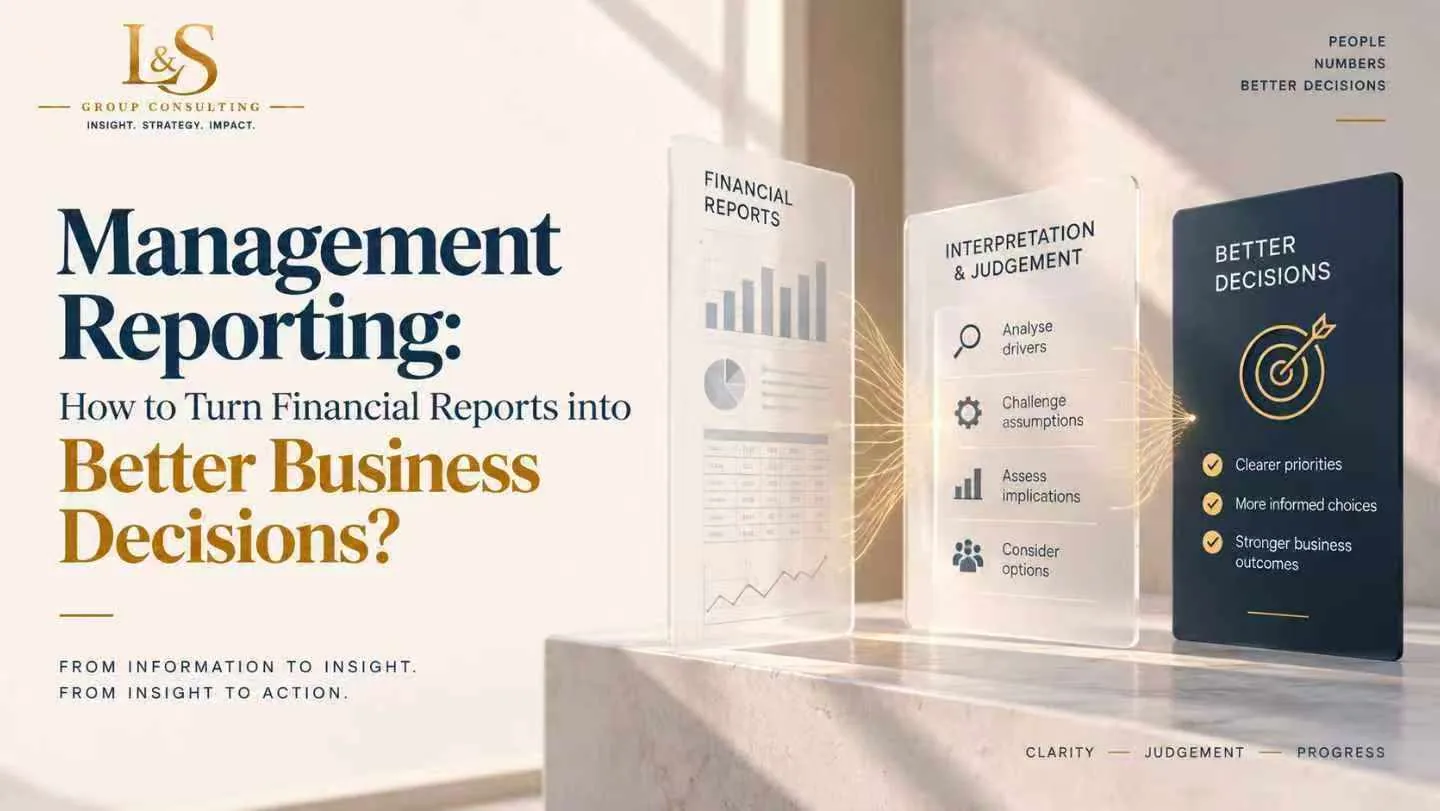
Management Reporting: How to Turn Financial Reports into Better Business Decisions
By Helen Li, FCPA · CA (ANZ)
A growing business can have accurate accounts, regular management reports and a detailed financial forecast — and still find financial decisions difficult.
That is because producing finance information and supporting management decisions are not the same thing.
A management report tells you what happened. Useful management information goes further. It helps management understand why it happened, whether it changes the outlook, and what the business may need to decide next.
Why Management Reporting Does Not Always Improve Business Decision-Making
As a business grows, management reporting often becomes more detailed. There may be more KPIs, more variance analysis, more departmental reporting and more frequent forecasts.
That can be useful. But more reporting does not necessarily create better management visibility.
If revenue is below budget, management does not only need to know the size of the variance. It needs to understand what is driving it.
Was sales volume lower? Did pricing change? Has the customer mix shifted? Is the timing different from what was expected? Is this a temporary movement, or does it change the assumptions behind the rest of the year?
Without that interpretation, the report describes the result but leaves management to work out what it means.
How to Use Variance Analysis for Better Management Decisions
Not every variance deserves the same amount of management attention. The important ones are those that could change a business decision.
A variance becomes more relevant when it changes management's view of: cash, gross margin, hiring, capacity, pricing, investment, working capital, or the assumptions behind the forecast.
The useful question is therefore not simply: Are we above or below budget?
It is: Has something changed that should affect what management believes or does next?
That is where management reporting begins to move from information into decision support.
How Financial Forecasting Supports Better Business Decisions
A forecast can contain future numbers and still be largely historical in the way it is used. If last month's assumptions are simply rolled forward, the forecast may remain technically current while becoming less useful for the decisions management is making now.
Consider a business planning additional hires. The forecast may already contain the payroll cost. But management may also need to know: whether expected revenue still supports the timing of those hires; what happens if customer receipts arrive later; whether gross margin assumptions still hold; how much working capital the growth plan will require; which investments can happen at the same time.
The value of a forecast is not simply that it produces another number. It is that management can challenge the assumptions and see whether the business should make a different decision.
A forecast is not forward-looking simply because it contains future numbers. It becomes forward-looking when current business information changes the assumptions behind it.
How to Make Management Reporting More Useful for Decision-Making
For any material number, variance or forecast movement, management should be able to answer four questions:
What changed? What is materially different from the previous expectation, budget or trend?
Why did it change? What commercial or operational driver sits behind the number?
What does it change about the outlook? Does the movement affect cash, margin, capacity, investment or another assumption management is relying on?
What decision follows? Does management need to change a plan, investigate further, adjust an assumption or take no action?
If finance information consistently stops at the first question, the business may have reporting — but not yet the level of decision support it needs.
When Growing Businesses Need More Than Financial Reporting
Good management reporting is not about producing the most KPIs or the most detailed reporting pack. It is about helping management identify what matters.
A growing business may still need accurate historical reporting. It may need stronger systems, cleaner data or more consistent reporting processes. But once the information is available, the next finance requirement is different.
Someone needs to interpret the information, challenge the assumptions and connect the financial movement to the business decision in front of management.
That is where finance information begins to become management judgement.
At L&S Group Consulting, we help growing businesses understand what they need from finance as their decision-making requirements become more complex.